







What Is Masala Chai? History, Ingredients & How to Make It
Masala chai is a spiced milk tea made from black tea, whole spices, and milk, originating in South Asia. The word "masala" means spice blend in Hindi and Urdu, and "chai" simply means tea. Together, masala chai translates as spiced tea — and it has been one of the most widely consumed beverages in the world for centuries.
What Does Masala Chai Taste Like?
Masala chai is warming, aromatic, and subtly sweet. The black tea provides a robust, slightly bitter base. The spices — cardamom, ginger, cinnamon, cloves, star anise, and black pepper — build in layers: floral, then warming, then gently spicy. The milk softens everything and adds a creamy richness. The result is a drink that feels grounding and complex at the same time.
No two masala chai blends taste identical. Regional recipes across India vary significantly — chai in Kolkata leans heavily on ginger, while Kashmiri chai is made with green tea and saffron. At Prana Chai, our recipe was developed after years of travelling through Asia and tasting hundreds of different blends.
What Are the Ingredients in Masala Chai?
A traditional masala chai contains:
- Black tea — Assam is the most common variety, valued for its bold, malty flavour and ability to hold up against milk and spices
- Ginger — warming and digestive, the backbone of most chai recipes
- Cardamom — the most aromatic of the chai spices, floral and slightly citrusy
- Cinnamon — sweet and warming, adds a familiar depth
- Cloves — pungent and intensely aromatic, used in small quantities
- Black pepper — adds heat and enhances the absorption of other spices
- Star anise — subtly liquorice, rounds and balances the blend
- Milk — traditionally full-fat dairy, though plant milks work beautifully
- Sweetener — sugar, jaggery, or honey
The specific quantities and spice combinations vary by recipe. This is what makes every chai blend its own — and why the difference between a great masala chai and a mediocre one is enormous.
A Brief History of Masala Chai
Tea has been grown in India for thousands of years, but the spiced milk tea version we know today became widespread in the 20th century. The British East India Company introduced mass tea cultivation in India in the 1800s to break China's monopoly on tea supply. To boost domestic consumption, Indian tea producers began promoting a spiced, milky preparation — and masala chai as a popular street drink was born.
Chai wallahs — street vendors selling cups of freshly brewed masala chai — became a fixture of Indian cities and railway stations. Today that tradition is as strong as ever, and masala chai has spread well beyond South Asia. It's now one of the fastest-growing beverage categories in the specialty coffee world.
Masala Chai vs Chai Latte: What's the Difference?
A chai latte is a westernised version of masala chai. In most cafes, a chai latte is made by mixing a powdered or syrup chai concentrate with steamed milk. It's sweeter, milder, and much less complex than a properly brewed masala chai.
True masala chai is brewed — whole or coarsely ground spices are steeped directly in milk, then strained. The difference in flavour is significant. A chai latte made from powder dissolves into the milk; a brewed masala chai infuses it.
At Prana Chai, we make sticky chai blends specifically designed to bridge this gap — a format that's easy enough for any cafe to use, but delivers the flavour of a genuinely brewed masala chai.
How Is Masala Chai Made?
The traditional method is to simmer tea and spices together in water, add milk, continue simmering, then strain and serve. The Prana Chai method is slightly different — our sticky chai blend is added directly to cold milk, which is then heated gently. This preserves more of the spice aromatics and gives a cleaner, brighter cup.
Full step-by-step instructions for every method — stovetop, barista, cold brew, and iced — are in our brewing guide.
Is Masala Chai Good for You?
The spices in masala chai have long been used in Ayurvedic medicine for their health properties. Modern research supports a number of these traditional uses:
- Ginger — well-studied for anti-nausea effects and digestive support
- Cardamom — associated with digestive health and antioxidant properties
- Cinnamon — studied for its role in blood sugar regulation
- Black pepper — contains piperine, which enhances the bioavailability of other nutrients
- Black tea — rich in antioxidants (polyphenols) linked to cardiovascular health
Masala chai also contains roughly one-third the caffeine of coffee, with tannins that slow its absorption — providing a gentler, more sustained energy lift without the spike and crash.
What Is the Best Masala Chai?
The best masala chai is made from whole or coarsely ground spices, brewed fresh, and made without artificial additives. Powdered chai concentrates can't replicate the flavour of fresh-brewed spices — the volatile oils that give masala chai its aroma and complexity are lost during processing.
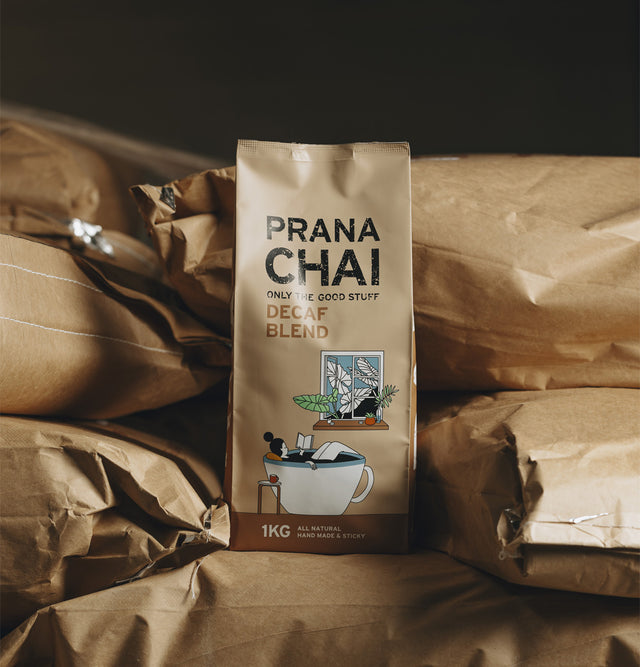
If you're buying masala chai to make at home or use in a cafe, look for a blend that lists real spices as ingredients (not "natural flavours"), uses a natural sweetener, and has no preservatives. Our full range of blends — Original, Vegan, Turmeric, Peppermint, and Decaf — are all made this way, fresh in our Melbourne factory.
Frequently Asked Questions
What does "chai" mean?
Chai simply means "tea" in Hindi, Urdu, and many other languages. "Masala chai" means spiced tea. In western countries, "chai" has come to specifically refer to spiced milk tea — but ordering a "chai tea" is technically redundant (it translates as "tea tea").
Does masala chai have caffeine?
Yes. Masala chai contains black tea, which contains caffeine — roughly one-third the amount found in coffee per serve. The tannins in black tea slow caffeine absorption, making the effect gentler than coffee. A caffeine-free option is available in our Decaf Blend.
Can you make masala chai without dairy?
Yes. Plant milks work very well in masala chai. Oat milk is the most popular choice in specialty cafes due to its creamy texture and neutral flavour. Almond, soy, and coconut all work too — coconut milk in particular adds a richness that pairs well with the spices.
What's the difference between masala chai and regular tea?
Regular black tea is brewed with water and served plain or with milk and sugar. Masala chai adds whole spices to the brew, uses milk as the primary liquid rather than water, and is typically sweetened. The result is a much more complex, warming, and aromatic drink.
How do you pronounce masala chai?
Masala chai is pronounced mah-SAH-lah CHAI. The "chai" rhymes with "sky" — not "chay" as it's sometimes mispronounced in cafes.
