







Masala Chai vs Chai Latte: What's the Difference?
Masala chai and a chai latte are not the same drink. Masala chai is traditionally brewed by steeping whole spices and black tea directly in milk, producing a complex, aromatic cup with depth and heat. A chai latte is typically made by dissolving a powdered mix or syrup concentrate into steamed milk — faster to make, milder in flavour, and significantly less interesting.
The Key Differences
| Masala Chai | Chai Latte | |
|---|---|---|
| Base | Whole or ground spices steeped in milk | Powdered mix or syrup dissolved in milk |
| Spice flavour | Complex, layered, aromatic | Flat, one-dimensional, often overly sweet |
| Sweetness | Natural — from honey or jaggery | High — added sugar in most commercial mixes |
| Caffeine | Moderate (black tea base) | Varies — often lower or inconsistent |
| Brew time | 8–10 minutes | Under 2 minutes |
| Ingredients | Real spices, tea, milk, natural sweetener | Usually processed powder with additives |
| Calories | Lower — no added sugar beyond the blend | Often high — commercial mixes are sugar-heavy |
What Is Masala Chai?
Masala chai originated in South Asia, where it has been consumed for centuries. "Masala" means spice blend, "chai" means tea. The traditional preparation involves simmering black tea and whole spices — cardamom, ginger, cinnamon, cloves, black pepper, star anise — in milk, then straining and serving.
The result is a drink with genuine complexity. The spices don't just flavour the milk — they infuse it with essential oils, transforming it into something completely different from what you started with. The flavour builds as you drink: floral cardamom first, then warming ginger, then a slow heat from black pepper at the back of the throat.
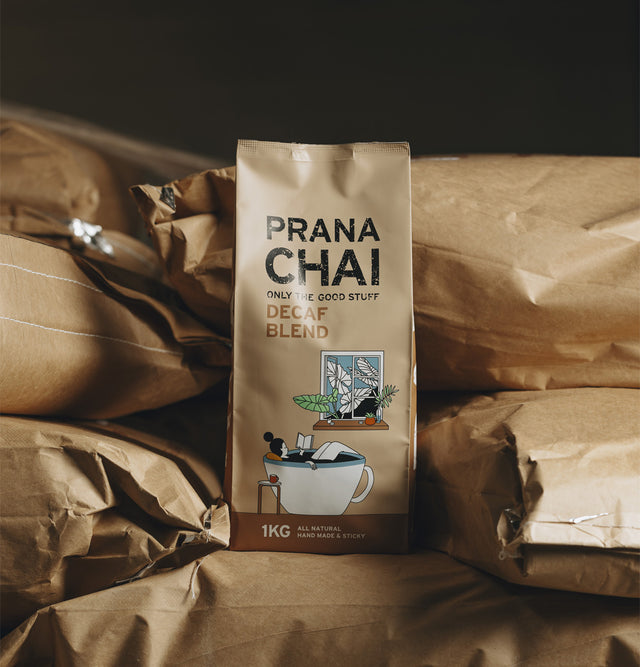
At Prana Chai, we make sticky chai blends — whole and coarsely ground spices coated in pure Australian honey. This preserves the essential oils in the spices and produces a much more flavourful brew than dry-blended powder.
What Is a Chai Latte?
The chai latte was popularised in western cafes in the 1990s and 2000s as a quick, consistent alternative to brewed chai. Most chai lattes are made from one of two things:
- Powdered chai mix — a dry blend of ground spices, sugar, and powdered milk or creamer, dissolved in hot water or milk
- Chai concentrate or syrup — a pre-brewed liquid concentrate, usually very sweet, added to steamed milk
Both formats prioritise speed and consistency over flavour. The trade-off is a drink that tastes sweet and spiced but lacks the aromatic depth of genuine brewed chai.
A standard large chai latte from a major chain can contain 40–50g of sugar. A serve of Prana Chai contains the natural sugars in honey — significantly less, and without the blood sugar spike of refined sugar.
Which Is Better for You?
Masala chai brewed from real spices delivers more of the health benefits associated with those spices — the essential oils and bioactive compounds in ginger, cardamom, cinnamon, and cloves are significantly more potent in whole or coarsely ground form than in processed powder.
Commercial chai latte mixes are also typically very high in sugar. Many contain more sugar per serve than a can of soft drink. If you're drinking chai for the health benefits — which are well documented — a brewed masala chai from real spices is the better choice by a significant margin.
Can You Make a Chai Latte with Masala Chai?
Yes — and the result is far better than a standard cafe chai latte. The barista method using Prana Chai:
- Steep 23g of Prana Chai in 60ml of hot water for 5 minutes
- Strain the concentrate into your cup
- Steam 200ml of milk to 60°C and pour over the concentrate
- Optional: add a light dusting of cinnamon on top
This is exactly how specialty cafes make it. The steamed milk gives you the latte texture; the real spice concentrate gives you the flavour that powdered chai can't match.
For the full range of brewing methods — stovetop, cold brew, iced — see our brewing guide.
Why Specialty Cafes Are Moving Away from Powdered Chai
The specialty coffee world has a growing intolerance for shortcuts. The same standards that drove the move from instant coffee to espresso, and from flavoured syrups to single-origin beans, are now being applied to chai.
Cafes that stock Prana Chai consistently report that customers notice the difference — and that a genuinely great chai latte becomes a destination drink rather than an afterthought. It's one of the reasons we now supply around 4,000 venues across 57 countries.
If you're a cafe owner considering making the switch, our wholesale page has everything you need to get started.
Frequently Asked Questions
Is a chai latte just chai tea with milk?
Not exactly. True chai tea (masala chai) is already brewed with milk. A chai latte in most western cafes is made from a powdered mix or syrup added to steamed milk — it's not the same as brewing real masala chai. The name "chai latte" has come to mean the westernised, often sweeter version of the drink.
Which has more caffeine — masala chai or a chai latte?
Masala chai brewed from real black tea contains roughly 25–35mg of caffeine per serve. Commercial chai latte mixes vary widely — some use real tea, others use tea extract or none at all. A brewed masala chai generally has more caffeine than a powdered chai latte, but less than coffee.
Why does cafe chai latte taste different from homemade chai?
Most cafe chai lattes are made from powder or concentrate, not fresh-brewed spices. Homemade chai brewed from a quality blend like Prana Chai will taste noticeably more complex and aromatic because the spice essential oils are extracted fresh during brewing, not processed into powder months earlier.
Is masala chai the same as Indian chai?
Yes — masala chai is the Indian spiced milk tea that has been consumed across South Asia for centuries. The term "Indian chai" is informal but refers to the same drink. Regional recipes vary significantly across India, but the core elements — black tea, warming spices, milk, sweetener — are consistent.
