








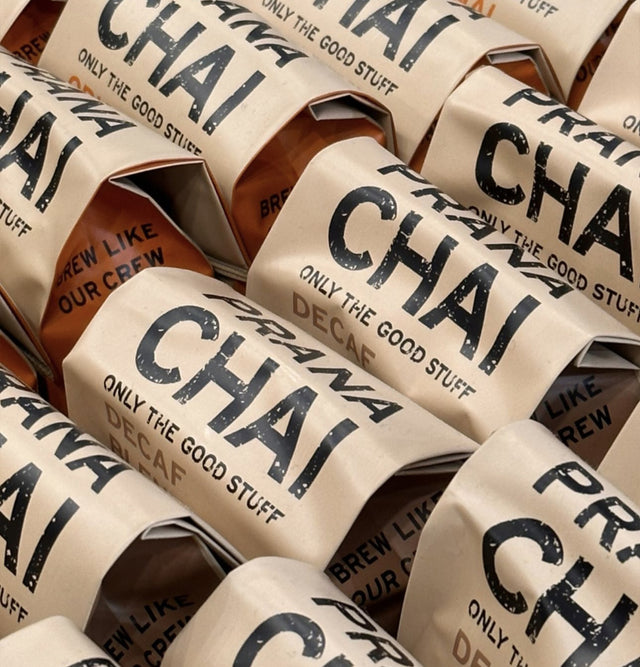
How to Make Chai Tea at Home (Every Method)
To make chai tea at home, combine 20–23g of masala chai blend with 300ml of milk in a small pot. Heat over medium heat, stirring regularly, until just below boiling point. Hold there for 3–4 minutes, then strain into your cup. The whole process takes under 10 minutes and produces a cup that's far better than anything from a powdered mix.
What You'll Need
- A masala chai blend — 20–23g per serve (roughly one heaped tablespoon)
- 300ml milk — dairy, oat, almond, soy, or coconut all work
- A small saucepan or chai pot
- A fine mesh strainer
- A cup or mug
That's it. No special equipment, no barista skills required.
The Classic Stovetop Method (Step-by-Step)
- Measure your chai. Add 20–23g of Prana Chai to your pot. This is roughly one heaped tablespoon — err on the side of more if you like a stronger brew.
- Add your milk. Pour in 300ml of cold milk directly over the chai. Starting cold gives the spices time to bloom as the temperature rises.
- Heat gently. Place the pot over medium heat. Stir regularly to prevent the chai from settling or the milk from scorching on the bottom.
- Watch the temperature. As the milk heats, you'll see steam rising and small bubbles forming at the edges. This is the sweet spot — just below boiling, around 80–85°C. Do not let it boil. Boiling breaks down the milk proteins and dulls the spice flavour.
- Hold and steep. Once you reach that temperature, reduce the heat to low and hold for 3–4 minutes. This is where the spices fully infuse into the milk. The longer you hold it, the stronger the brew.
- Strain and serve. Pour through a fine mesh strainer into your cup. The strainer catches the whole spices and tea leaves, leaving you with a smooth, clean chai.
Total time: 8–10 minutes.
Choosing the Right Milk
The milk you use makes a real difference to the final flavour.
| Milk | Result | Best for |
|---|---|---|
| Full-fat dairy | Rich, creamy, traditional | Classic masala chai |
| Oat milk | Creamy, slightly sweet, neutral | Best plant-based option overall |
| Almond milk | Lighter, slightly nutty | Lower-calorie option |
| Soy milk | Creamy, higher protein | Good froth for latte-style |
| Coconut milk | Rich, tropical, slightly sweet | Pairs well with turmeric chai |
Oat milk is the most popular choice in specialty cafes and works brilliantly at home — it has enough body to carry the spices without overpowering them.
How to Make a Chai Latte at Home
A chai latte is just masala chai with a bit more steamed milk and a lighter spice ratio. To make one at home:
- Steep 15g of Prana Chai in 60ml of water (not milk) over medium heat for 5 minutes — this creates a concentrated chai base
- Strain the chai concentrate into your cup
- Heat 200ml of milk separately and froth it if you have a frother
- Pour the frothed milk over the concentrate
- Optional: dust with cinnamon
This method gives you a lighter, more latte-like result — perfect if you prefer something less intense than the full stovetop brew.
How to Make Iced Chai at Home
For iced chai, brew a concentrate and pour it over ice:
- Steep 25g of Prana Chai in 100ml of water over medium heat for 5–6 minutes
- Strain the hot concentrate into a glass filled with ice
- Top with 200ml of cold milk
- Stir and serve immediately
The ice dilutes the concentrate slightly as it melts — so brew a little stronger than you think you need.
How to Cold Brew Chai at Home
Cold brew chai is brewed without any heat — the spices steep slowly in cold milk overnight. The result is smoother and less spicy than hot-brewed chai, with a naturally sweet flavour.
- Add 120g of Prana Chai to 1.8 litres of cold milk in a large jug or jar
- Stir to combine, cover, and refrigerate for 8 hours (or overnight)
- Strain through a fine mesh strainer
- Serve over ice
Cold brew chai keeps in the fridge for up to 3 days after straining. It's a great option for making a batch at the start of the week.
Tips for a Better Cup
- Don't boil the milk. The single most common mistake. Boiling makes milk taste flat and dulls the spice complexity. Aim for just below boiling and hold there.
- Stir regularly. Keeps the chai moving and prevents the milk from scorching on the bottom of the pot.
- Adjust the strength. More chai = stronger, spicier brew. Less = milder. Start with 20g and adjust from there to find your ratio.
- Use a proper strainer. A fine mesh strainer catches everything cleanly. A coarse strainer lets ginger and tea particles through and makes the cup grainy.
- Try different milks. The same blend tastes noticeably different across milk types — it's worth experimenting.
How Much Chai Per Cup?
The standard ratio is 20–23g of Prana Chai per 300ml of milk. For reference:
- 250g bag — approximately 11–12 serves
- 1kg bag — approximately 43–50 serves
If you're making chai regularly, the 1kg subscription works out to the best value and ensures you never run out.
Frequently Asked Questions
Can I reuse chai after steeping?
You can get a second, lighter brew from the same chai, but the flavour will be significantly weaker. Most of the essential oils and caffeine are extracted on the first brew. For best results, use fresh chai each time.
Can I make chai without a strainer?
A fine mesh strainer is strongly recommended. Without one, you'll end up with spice particles and tea leaves in your cup. In a pinch, a clean cloth or paper towel works, but a dedicated chai strainer is worth having.
How do I make chai stronger?
Use more chai (up to 30g per 300ml), steep for longer (up to 6 minutes), or use less milk. The ratio is flexible — adjust to your taste.
Can I make chai in a microwave?
It's possible but not recommended. The microwave heats unevenly and makes it difficult to control the temperature — you'll likely either underbrew (weak flavour) or boil the milk (flat, dull taste). The stovetop takes less than 10 minutes and produces a much better result.
Does chai go off?
Prana Chai has a shelf life of approximately two years stored in a cool, dry place in an airtight container. No refrigeration needed before opening. Once brewed, drink immediately for best flavour — or refrigerate cold brew for up to 3 days.
